


1
/
of
6
Herbs Store
Vasaka (Raw) - Bansa / Vasa / Adhatoda | For Cough, Cold, Sore Throat
Vasaka (Raw) - Bansa / Vasa / Adhatoda | For Cough, Cold, Sore Throat
Regular price
Rs. 128.00
Regular price
Sale price
Rs. 128.00
Taxes included.
Shipping free
%
Buy 3 get 7% off
Shop any 3 & Get Extra 7% Off
Code: B3G7
%
Buy 2 get 5% off
Shop any 2 & Get Extra 5% off
Code: B2G5
Quantity
Couldn't load pickup availability
Vasaka, also known as Vasa, Vasuka, Adulsa and Basak, is a well-known herb in Vasa Ayurveda, traditionally valued for respiratory wellness. The Vasaka scientific name is Justicia adhatoda (also known as Adhatoda vasica). The Vasaka plant is especially recognised for its leaves, which are used in traditional Ayurvedic preparations for cough, congestion and throat discomfort.
Key Health Benefits of Vasaka
Supports Respiratory Health: Traditionally used to support breathing comfort and maintain respiratory wellness.
Helps Soothe Cough: Vasaka leaves have a long history of use in herbal preparations for cough and throat irritation.
Supports Mucus Clearance: The herb is traditionally valued for its expectorant properties, which may help loosen mucus.
Traditional Bronchial Support: Used in Ayurveda for respiratory complaints associated with congestion and breathing discomfort.
Soothes Throat Irritation: Preparations containing Vasaka are traditionally used to ease throat discomfort and hoarseness.
Traditional Anti-inflammatory Properties: Research has examined compounds in Vasaka for potential biological activity, although more human studies are needed.
Traditional Use for Bleeding: Certain Ayurvedic preparations use Vasaka for its traditionally recognised haemostatic properties.
These Vasaka benefits reflect traditional applications and do not establish that the herb treats asthma, bronchitis, or other medical conditions.
How to use Vasaka leaves
The Vasaka leaves uses vary according to the preparation. Leaves are commonly used in traditional herbal formulations.
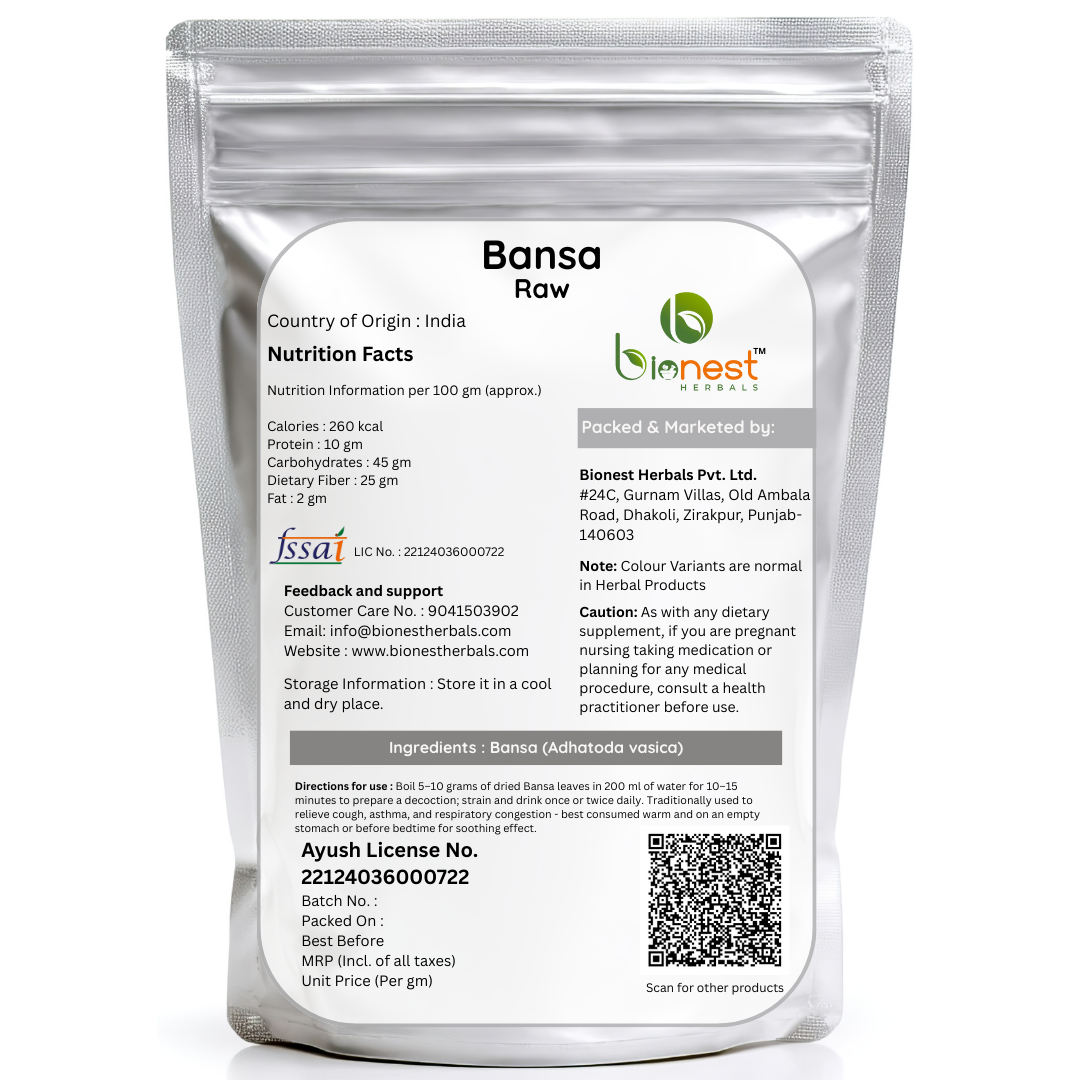
oil 5–10 grams of dried Bansa leaves in 200 ml of water for 10–15 minutes to prepare a decoction; strain and drink once or twice daily. Traditionally used to relieve cough, asthma, and respiratory congestion - best consumed warm and on an empty stomach or before bedtime for soothing effect.
Vasa Powder: Dried leaves are processed into Vasa powder for use in Ayurvedic formulations.
Vasaka Syrup: Vasaka syrup is used in some traditional preparations for cough and respiratory comfort.
Vasa Ayurvedic Cough Syrup: Vasaka is a common ingredient in certain herbal cough formulations.
Vasavaleha: A traditional Ayurvedic preparation containing Vasaka.
Vasakarista: Also called Vasarishta, this is a traditional fermented Ayurvedic formulation associated with the herb.
Botanical Information & Common Names
Scientific name: Justicia adhatoda (syn. Adhatoda vasica)
Family: Acanthaceae
Common names: Vasaka, Vasa, Adulsa, Adusa
Basak scientific name: Justicia adhatoda
Hindi name: Adulsa
Bengali name: Basak
English name: Malabar Nut
Part used: Primarily leaves
Other Names
Adaatoodaa, Adarushah, Adhatoda Vasaka, Adhatoda vasica, Adulsa, Adusa, Adusha, Arusa, Arusak, Arusha, Bans, Bansa, Bansa Green, Basonta, Berge Adusa, Berge Arusa, Berge Bansa, Bhekar, Carmantine, Jauz al-maalaabaar, Khwaja, Malabar Nut, Malabar Nut tree, Noix de Malabar, Rusa, Sinhaparni, Vansa, Vasa, Vasaka
In Bengali, Basak pata benefits, Basak pata for cough, and Basak leaves are commonly searched terms. Basok pata in English refers to Malabar Nut leaves. The terms Basak plant, Vasa plant, and Vasa tree are also used in searches, although the plant is generally a shrub rather than a true tree.
People searching for Vasa Ayurvedic medicine, Vasa Easy Ayurveda, or Vasaka uses should note that traditional use is not a substitute for professional medical advice.
Share




Why Choose Bionest Herbals?
At Bionest Herbals, we aim to make traditional Indian herbs accessible to customers looking for raw herbs, herbal powders and other botanical ingredients.
Carefully selected herbs: Attention to the identity and condition of the raw material.
Ingredient-focused products: Clear product information to help customers make informed choices.
No unnecessary additives: Product composition should be checked on the individual label.
Convenient herbal options: Explore dried herbal ingredients and powdered forms according to availability.
Responsible herbal sourcing: A focus on quality, product handling and the value of traditional plant-based ingredients.
