


1
/
of
8
Herbs Store
Nirgundi beej (Raw) - Sambhalu| Pain Relief, Inflammation & Joint Health
Nirgundi beej (Raw) - Sambhalu| Pain Relief, Inflammation & Joint Health
Regular price
Rs. 129.00
Regular price
Sale price
Rs. 129.00
Taxes included.
Shipping free
%
Buy 3 get 7% off
Shop any 3 & Get Extra 7% Off
Code: B3G7
%
Buy 2 get 5% off
Shop any 2 & Get Extra 5% off
Code: B2G5
Quantity
Couldn't load pickup availability
Nirgundi Beej, also known as Renuka Seeds, comes from the Nirgundi plant (Vitex negundo), a herb traditionally valued in Ayurveda. Different parts of the plant, including its leaves, roots, and seeds, have been used in traditional herbal practices, particularly for supporting joint comfort and overall wellness.
Key Benefits of Nirgundi Beej
Joint and Muscle Comfort: Traditionally valued for helping manage joint discomfort, stiffness, and muscular aches.
Anti-Inflammatory Properties: Nirgundi is traditionally used to support comfort in areas affected by swelling and inflammation.
Respiratory Wellness: Different parts of the Nirgundi plant have traditional uses for respiratory comfort.
Skin Care: Nirgundi leaves and other plant parts have been used in traditional herbal skincare practices.
Ayurvedic Wellness: Nirgundi benefits are discussed in traditional Ayurveda in relation to Vata-Kapha balance and general well-being.
Directions for use
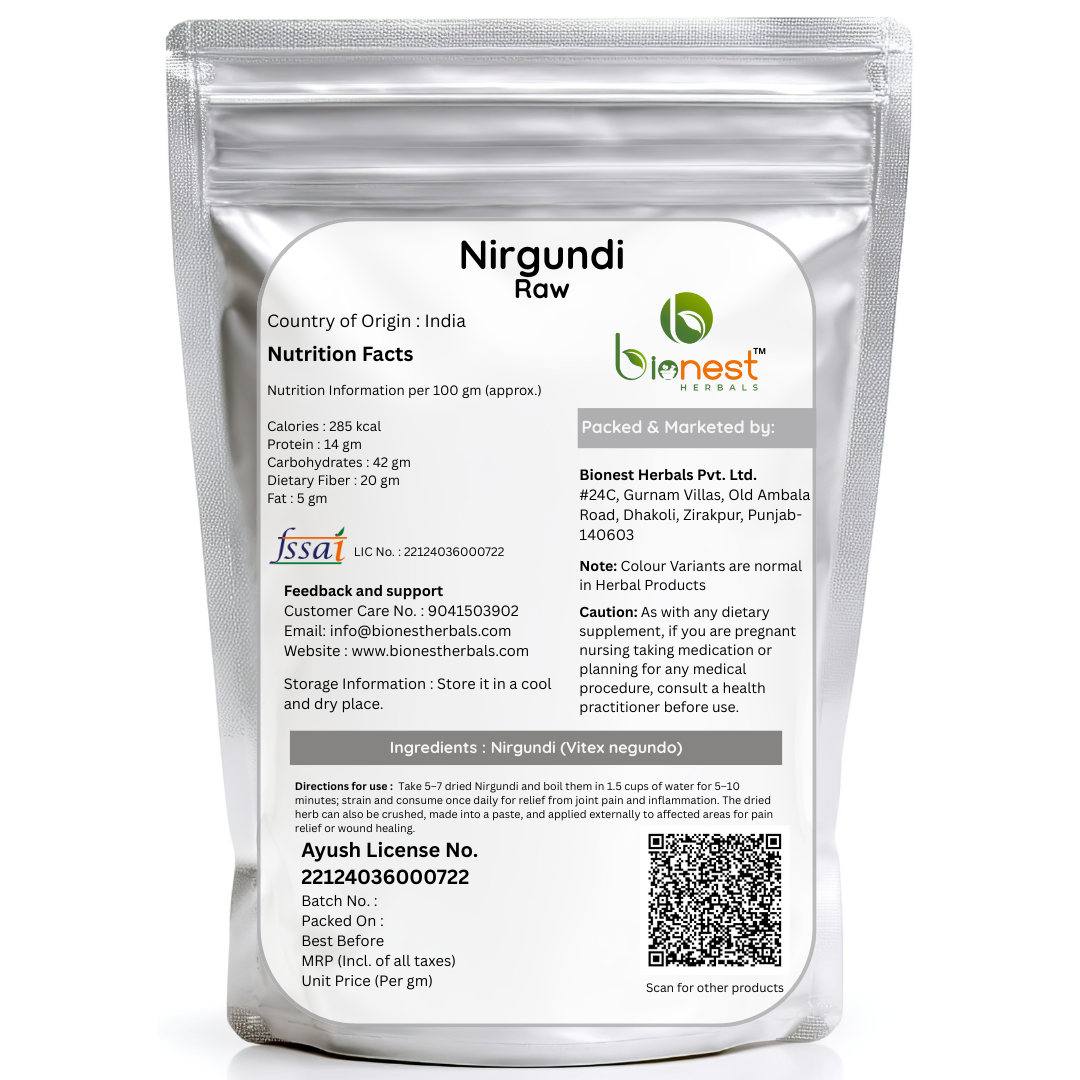
Take 5–7 dried Nirgundi and boil them in 1.5 cups of water for 5–10 minutes; strain and consume once daily for relief from joint pain and inflammation. The dried herb can also be crushed, made into a paste, and applied externally to affected areas for pain relief or wound healing.
Nirgundi Seeds and Traditional Uses
Nirgundi seeds are one part of this versatile medicinal plant. Other commonly searched products and plant parts include Nirgundi powder, Nirgundi oil, and Nirgundi leaves. Traditionally, Nirgundi oil is used externally in massage practices to support joint and muscle comfort.
People also search for Nirgundi leaves uses, Nirgundi oil benefits, Nirgundi fruit, Nirgundi ki jad (root), and Nirgundi ghan vati. These refer to different plant parts or preparations and should not be considered interchangeable with Nirgundi Beej.
Botanical Information
Botanical Name: Vitex negundo
Common Name: Nirgundi, Five-Leaved Chaste Tree
Hindi Names: Nirgundi, Nirgudi, Sambhalu
Hindi Search Term: Nirgundi ka paudha
Plant Information: The Nirgundi tree is a medicinal shrub or small tree traditionally used in Ayurveda.
Other preparations searched online include Nirgundyadi Kashayam, Nirgundi syrup, and Nirgundi ras. Their ingredients and uses may vary, so check the specific product label. Searches for Nirgundi in English or a Nirgundi plant photo can also help identify the plant.
Other Names
Banjangasht, Banni, Belenekki, Bharwan, Five-Leaved Chaste Tree, Gattilier incise, Huang ping, Lingad, Maura, Mewri, Mönchspfeffer, Nagad, Nagod, Nigad, Nirgandi, Nirgumdo, Nirgundi, Nishinda, Nisinda, Samalu, Sambhalu, Samhalu, Sawbhalu, Sisban, Swanjan, Tukhme Sambhalu, Vitex negundo Linn
Share




Why Choose Bionest Herbals?
At Bionest Herbals, we aim to make traditional Indian herbs accessible to customers looking for raw herbs, herbal powders and other botanical ingredients.
Carefully selected herbs: Attention to the identity and condition of the raw material.
Ingredient-focused products: Clear product information to help customers make informed choices.
No unnecessary additives: Product composition should be checked on the individual label.
Convenient herbal options: Explore dried herbal ingredients and powdered forms according to availability.
Responsible herbal sourcing: A focus on quality, product handling and the value of traditional plant-based ingredients.
