


1
/
of
6
Herbs Store
Daru Haldi (Raw) - Daruharidra | For Liver, Skin, Digestive Health
Daru Haldi (Raw) - Daruharidra | For Liver, Skin, Digestive Health
Regular price
Rs. 126.00
Regular price
Sale price
Rs. 126.00
Taxes included.
Shipping free
%
Buy 3 get 7% off
Shop any 3 & Get Extra 7% Off
Code: B3G7
%
Buy 2 get 5% off
Shop any 2 & Get Extra 5% off
Code: B2G5
Quantity
Couldn't load pickup availability
Daru Haldi, also known as Daruharidra, is a traditional Ayurvedic herb obtained from the Indian barberry plant (Berberis aristata). Recognized for its characteristic bitter taste and golden-yellow wood, it has been used in Ayurveda for digestive wellness, skin care, and general health support.
Daru Haldi contains berberine, a naturally occurring plant alkaloid studied for its biological properties. Traditional daruharidra benefits are associated with supporting liver function, healthy metabolism, and skin wellness. This herb remains an important ingredient in traditional Ayurvedic preparations.
Key Health Benefits of Daru Haldi
Digestive Support: Traditional daru haldi benefits include supporting digestion, appetite, and digestive comfort.
Liver Wellness: Daruharidra has a long history of traditional use for supporting liver and digestive health.
Skin Care: Its traditional applications include external preparations for skin cleansing and soothing minor skin concerns.
Antioxidant Properties: Daru Haldi contains bioactive compounds that have attracted scientific interest for their antioxidant and other biological activities.
Metabolic Health: Berberine has been studied for its potential effects on glucose and lipid metabolism, but Daru Haldi should not replace prescribed treatment for diabetes or other metabolic conditions.
Traditional Eye Care: Some Ayurvedic traditions describe its use in eye-related preparations; however, homemade preparations should never be applied directly to the eyes.
These traditional applications explain the interest in daru haldi ke fayde and daruharidra benefits among people exploring Ayurvedic herbs.
Traditional Daru Haldi Uses
The main daru haldi uses involve traditional herbal preparations made from its wood or root bark.
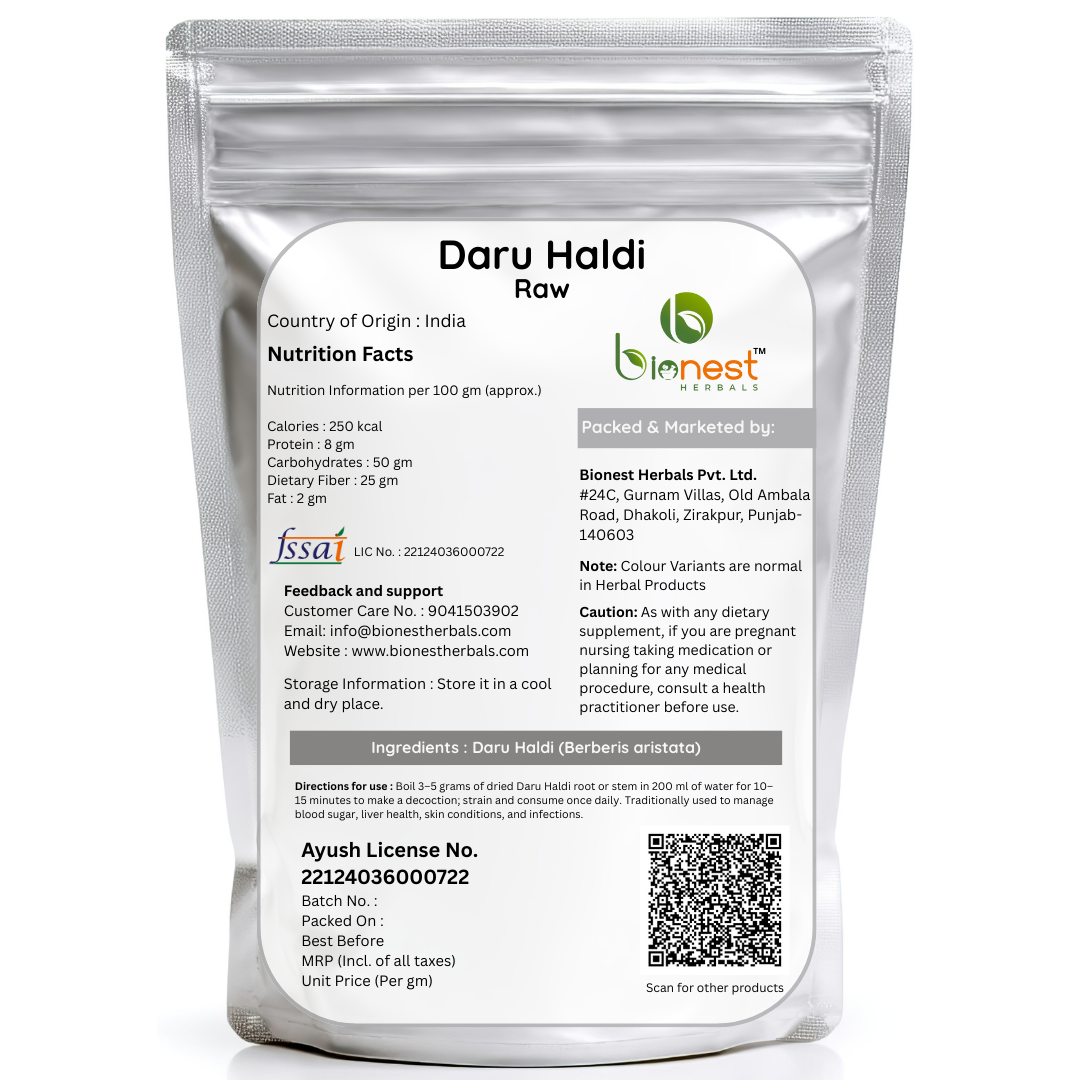
Daru Haldi Kadha: Boil 3–5 grams of dried Daru Haldi root or stem in 200 ml of water for 10–15 minutes to make a decoction; strain and consume once daily. Traditionally used to manage blood sugar, liver health, skin conditions, and infections.
Daru Haldi Powder: The powdered herb is used as an ingredient in selected traditional Ayurvedic formulations.
Daruharidra Powder: Also known as daruharidra powder, this preparation is used in traditional herbal practices.
External Applications: Traditionally prepared pastes have been used in skin-care applications, although suitability depends on the preparation and individual sensitivity.
The appropriate preparation depends on the intended use and the product's formulation. Avoid self-prescribing Daru Haldi for liver disease, diabetes, infections, or other medical conditions.
Botanical Information & Common Names
Common Name: Daru Haldi
Sanskrit Name: Daruharidra, Darvi
Botanical Name: Berberis aristata
Plant Information: The daruhaldi plant is a thorny shrub known for its yellow wood and roots.
Part Used: Traditionally, the stem wood and root bark are used in herbal preparations.
Other Names
Ameerbaarees, Barbarees (Root), Berberis Aristata, Darhald (Root), Darhaldi, Daruhalad, Daruhaldi, Daruharidra, Darvi, Filzahrah (Root), Indian Barberry, Mard Risin, Rasajan, Rasanjan, Rasaut (Root Bark Extract), Rassaut (Root Bark Extract), Rasvanti, Rasvat, Sumblo, Zarashk, Zarishk (Berries), Zirishk (Berries)
Share




Why Choose Bionest Herbals?
At Bionest Herbals, we aim to make traditional Indian herbs accessible to customers looking for raw herbs, herbal powders and other botanical ingredients.
Carefully selected herbs: Attention to the identity and condition of the raw material.
Ingredient-focused products: Clear product information to help customers make informed choices.
No unnecessary additives: Product composition should be checked on the individual label.
Convenient herbal options: Explore dried herbal ingredients and powdered forms according to availability.
Responsible herbal sourcing: A focus on quality, product handling and the value of traditional plant-based ingredients.
