


1
/
of
6
Herbs Store
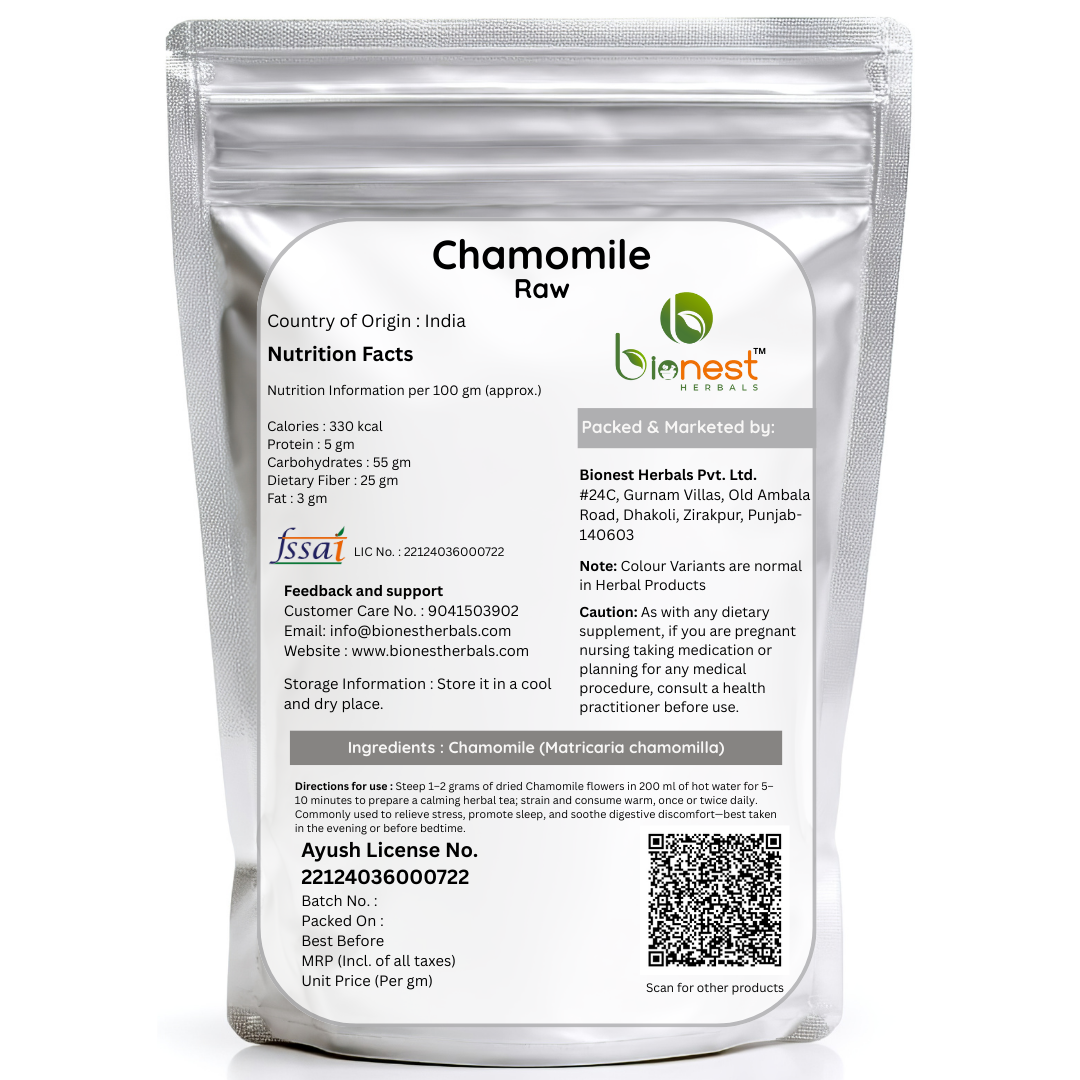
Chamomile Flowers (Raw) - Gul Babuna | Herbal Tea for Sleep, Calmness
Chamomile Flowers (Raw) - Gul Babuna | Herbal Tea for Sleep, Calmness
Regular price
Rs. 220.00
Regular price
Sale price
Rs. 220.00
Taxes included.
Shipping free
%
Buy 3 get 7% off
Shop any 3 & Get Extra 7% Off
Code: B3G7
%
Buy 2 get 5% off
Shop any 2 & Get Extra 5% off
Code: B2G5
Quantity
Couldn't load pickup availability
Chamomile flowers, also known as Gul Babuna or Babuna Phool, are valued in traditional herbal practices for their gentle, soothing qualities. The chamomile plant produces delicate flowers commonly used to prepare a relaxing herbal tea. Also spelled camomile, this herb is traditionally associated with relaxation, digestive comfort, and skin care.
Chamomile contains naturally occurring plant compounds and aromatic oils that have attracted interest for their potential wellness benefits. Whether enjoyed as a warm infusion or used in traditional herbal preparations, chamomile benefits are often associated with promoting calmness and supporting everyday well-being.
Key Health Benefits of Chamomile
Relaxation and Sleep: Chamomile is traditionally used to encourage relaxation and support restful sleep.
Digestive Comfort: A cup of chamomile flower tea may help soothe occasional indigestion, gas, and bloating.
Stress Relief: Its gentle aroma and traditional calming properties make chamomile a popular choice for unwinding.
Skin Care: Chamomile preparations are traditionally used to soothe minor skin irritation and redness.
Mouth and Throat Comfort: Cooled chamomile infusions have traditionally been used as a gargle for minor mouth and throat discomfort.
Antioxidant Support: Chamomile contains plant compounds with antioxidant activity that are being studied for their potential role in general wellness.
These traditional applications explain the popularity of chamomile tea uses in everyday herbal routines. However, chamomile is not a substitute for medical treatment, and evidence for some claimed benefits remains limited.
Traditional Uses of Chamomile Flowers
Chamomile is widely used in different herbal preparations:
Chamomile Herbal Tea: Steep dried flowers in hot water to make a fragrant infusion traditionally enjoyed for relaxation.
Chamomile Flower Tea: A simple floral beverage commonly consumed as part of a calming evening routine.
Loose Leaf Chamomile Tea: Dried whole flowers can be used to prepare tea according to personal taste.
Chamomile Green Tea: A blend of green tea and chamomile combines the character of green tea with chamomile's floral aroma.
Lavender Chamomile Tea: This herbal blend pairs chamomile with lavender for a fragrant, relaxing beverage.
Chamomile Extract: Concentrated preparations are available for specific uses, depending on the formulation.
People searching for what is chamomile tea, chamomile tea leaves, chamomile tea powder, chamomile tea bags, or organic chamomile tea are often exploring different ways to enjoy this herb. Bionest Herbals Chamomile Flowers are suitable for those who prefer dried flowers for their own herbal preparations.
Botanical Information & Common Names
Common Names: Chamomile, Camomile, Gul Babuna, Babuna Phool
Scientific Names: Matricaria recutita or Chamomilla recutita (German chamomile)
Plant Family: Asteraceae
Plant Part Used: Flowers
Popular Preparation: Chamomile herbal tea and other traditional herbal infusions
Other Names
babuna phool, chamomile flower, chamomile flower dried, Flos Chamomillae, German chamomile, Gul Babuna, Hungarian Chamomile, Matricaria Flowers, Pinheads, Sweet False Chamomile, True Chamomile, wild chamo- mile
Share




Why Choose Bionest Herbals?
At Bionest Herbals, we aim to make traditional Indian herbs accessible to customers looking for raw herbs, herbal powders and other botanical ingredients.
Carefully selected herbs: Attention to the identity and condition of the raw material.
Ingredient-focused products: Clear product information to help customers make informed choices.
No unnecessary additives: Product composition should be checked on the individual label.
Convenient herbal options: Explore dried herbal ingredients and powdered forms according to availability.
Responsible herbal sourcing: A focus on quality, product handling and the value of traditional plant-based ingredients.
