


1
/
of
6
Herbs Store
Akarkara Roots (Raw) - Premium Roots for Vitality, Immunity, Oral Health
Akarkara Roots (Raw) - Premium Roots for Vitality, Immunity, Oral Health
Regular price
Rs. 159.00
Regular price
Sale price
Rs. 159.00
Taxes included.
Shipping free
%
Buy 3 get 7% off
Shop any 3 & Get Extra 7% Off
Code: B3G7
%
Buy 2 get 5% off
Shop any 2 & Get Extra 5% off
Code: B2G5
Quantity
Couldn't load pickup availability
Akarkara Roots (Anacyclus Pyrethrum) – Traditional Ayurvedic Jadi Buti
Akarkara is a traditional medicinal herb valued in Ayurveda and Unani systems for its distinctive pungent taste and warming properties. Commonly known as Pellitory Root or Akarkara Ki Jad, this herb has a long history of use in traditional herbal preparations. Its botanical name is Anacyclus pyrethrum, and it belongs to the Asteraceae family.
Akarkara roots, also referred to as Akarkara Jadi Buti, are traditionally associated with digestive support, oral care, vitality and general wellness. The root is used in different forms, including dried whole roots and Akarkara root powder, also known as Akarkara Churna. Traditionally, the herb is described as having a stimulating nature and is associated with balancing Vata and Kapha according to Ayurvedic principles.
For those exploring Akarkara uses, understanding its traditional applications, botanical identity and appropriate handling can help in making an informed choice. At Bionest Herbals, we focus on providing carefully selected herbal ingredients for customers interested in traditional Indian herbs.
Akarkara Benefits: Traditional Uses and Properties
When researching Akarkara ke fayde Hindi, Akarkara benefits, or its place in Ayurveda, it is important to distinguish traditional beliefs from benefits established through modern clinical research.
Some of the traditional applications of Akarkara root include:
Traditional oral care: The root has historically been used in certain preparations for teeth and gums.
Digestive support: Traditionally used in small quantities in formulations intended to stimulate appetite and digestion.
Vitality and stamina: Included in traditional herbal preparations associated with physical vigor.
Nervous system support: Valued in some Ayurvedic and Unani formulations for its stimulating properties.
Respiratory wellness: Traditionally incorporated into selected preparations for Kapha-related complaints.
Muscle and joint comfort: Used in certain traditional external applications.
Saliva stimulation: The pungent root is traditionally known for producing a noticeable salivary response.
These are traditional uses rather than guaranteed health outcomes. Reliable clinical evidence for many specific Akarkara benefits in humans remains limited.
Akarkara Benefits for Male Wellness
Akarkara benefits for male wellness are frequently discussed in traditional Ayurvedic and Unani practices. The herb has historically appeared in certain formulations associated with vitality, stamina and reproductive wellness.
However, traditional use should not be interpreted as proof that Akarkara treats erectile dysfunction, infertility, low testosterone or other medical conditions. Scientific evidence supporting these specific outcomes is limited. Anyone considering Akarkara for reproductive or sexual health should consult a qualified healthcare professional, particularly if taking medication or managing an existing condition.
Akarkara Uses in Traditional Preparations
Akarkara root has traditionally been incorporated into herbal preparations in different ways. The method depends on the formulation, the quality of the raw material and the advice of a qualified practitioner.
Common traditional preparation formats include:
Root powder: Used as an ingredient in practitioner-directed herbal formulations.
Herbal combinations: Combined with other herbs in selected traditional preparations.
External preparations: Historically incorporated into certain topical herbal oils and formulations.
Whole-root preparations: Used as a raw ingredient in traditional herbal practices.
Akarkara is a potent herb, and more is not necessarily better. There is no universally established, evidence-based dosage for every preparation. Avoid self-prescribing concentrated powders or homemade medicinal mixtures, and seek professional advice before internal use.
Akarkara Botanical Name and Other Names
Understanding the botanical identity is useful when searching for Akarkara online or comparing herbal products.
Botanical name: Anacyclus pyrethrum
Family: Asteraceae
Common English name: Pellitory Root
Hindi name: Akarkara
Traditional name: Akarkara Ki Jad
Herbal category: Traditional Ayurvedic and Unani herb
Common product forms: Dried roots and Akarkara root powder
Other Names: Searches such as Akarkara Hindi, Akarkara in English, Akarkara botanical name and Akarkara jadi buti generally relate to the identity and traditional uses of this herb.
Aaqarqarhaa, Aaqir Qarha, Akalakarabha, Akalkara, Akallakara, Akallka, Akaltnak, Akarakarabh, Akarkara, Akarkarava, Akarkarbha, Akikaruka, Akkalakada, Akkalakara, Akkalakarra, Akkalgaro, Akkalkaro, Akkallakara, Akkarakaram, Akravu, Anacyclus Pyrethrum, Aqaraqarh, Aqarqarah, Bekhe Tarkhoon, Kakrah, Karkara, Kulekhara, Kurkurhaan, Longwort, Pellitory
Akarkara Root Powder and Akarkara Churna
Akarkara is available in different forms depending on the intended preparation. Whole dried roots are commonly used in traditional herbal practices, while finely ground roots are referred to as Akarkara root powder or Akarkara Churna.
The whole root is suitable for those who prefer dried herbal ingredients, whereas the powdered form can be incorporated into traditional formulations by qualified practitioners.
When purchasing Akarkara powder, consider its botanical identity, ingredient purity, storage conditions and the reliability of the supplier. The product should be kept dry and protected from contamination.
Akarkara Plant Uses in Hindi and Traditional Herbal Practices
The Akarkara plant is primarily valued for its root in traditional herbal systems. The root is the part most commonly associated with its characteristic pungency and traditional applications.
People searching for Akarkara plant uses in Hindi often want to understand how the root differs from the powdered form and how it is traditionally used. In Hindi, the herb is generally called Akarkara, while “Akarkara Ki Jad” refers specifically to its root.
The name Akarkara in English is commonly associated with Pellitory Root. However, similar vernacular names can sometimes refer to different plants, so checking the botanical identity is important before purchasing or using the herb.
What About Irani Akarkara?
Some sellers use names such as Irani Akarkara, Irani Akarkara Powder and Irani Akarkara Seeds in product listings. These commercial or regional names should not automatically be assumed to refer to the same botanical species or plant part as Anacyclus pyrethrum.
If you are researching Irani Akarkara benefits or comparing Irani Akarkara with regular Akarkara, verify the botanical name, plant part and supplier's product specifications. Seeds and roots are different plant parts, and their identity and suitability should be established before use.
Storage Instructions for Akarkara Roots
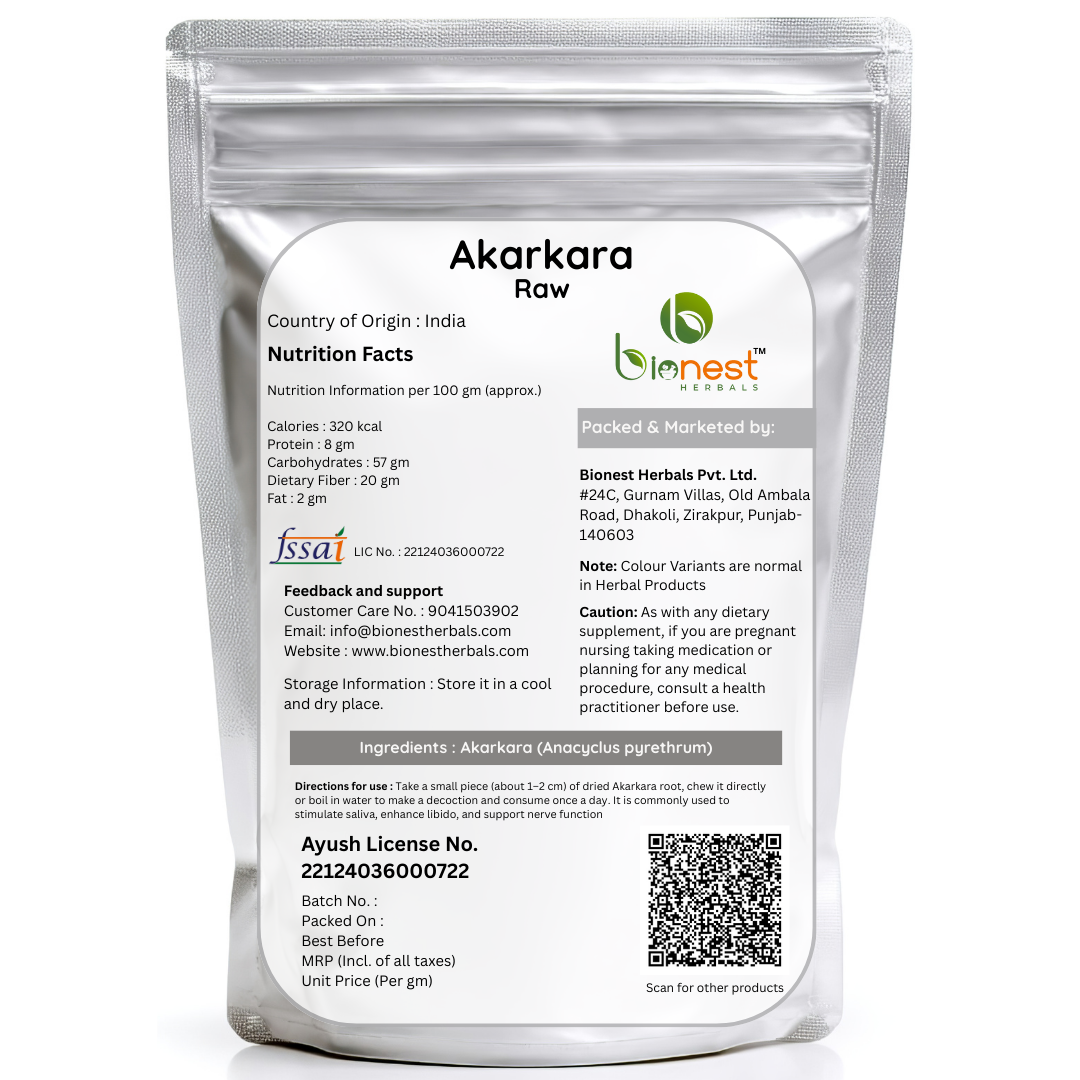
Store dried Akarkara roots in a clean, airtight container in a cool and dry location. Keep them away from direct sunlight, humidity and strong odours. Always use clean, dry utensils when handling the herb and follow the storage instructions provided on the product packaging.
Choose Bionest Herbals when exploring traditional herbs such as Akarkara Roots, and always check the product label for the exact botanical identity, ingredients and intended use.
Directions for use
Take a small piece (about 1–2 cm) of dried Akarkara root, chew it directly or boil in water to make a decoction and consume once a day.
Share




Why Choose Bionest Herbals?
At Bionest Herbals, we aim to make traditional Indian herbs accessible to customers looking for raw herbs, herbal powders and other botanical ingredients.
Carefully selected herbs: Attention to the identity and condition of the raw material.
Ingredient-focused products: Clear product information to help customers make informed choices.
No unnecessary additives: Product composition should be checked on the individual label.
Convenient herbal options: Explore dried herbal ingredients and powdered forms according to availability.
Responsible herbal sourcing: A focus on quality, product handling and the value of traditional plant-based ingredients.
